The Wallet

I was not looking for it.
I was taking out the ashes.
The box has sat on a shelf in my house for five years. Not because I forgot it was there. Because I knew exactly where it was, and I wasn’t ready, and then I was busy, and then another year went by. My father died on January 22, 2021, and the box came home with me and went onto the shelf, and life kept moving the way it does when you have no choice.
Three days from now, I’m flying west to see my sister. I haven’t seen her in eight years. One of my father’s final wishes was that I scatter his ashes from one end of Canada to the other, and this is the first time I’ve had the means and the momentum to begin.
So I went to get the ashes.
I opened the bag from the funeral home. Inside was the big box, and I lifted it out, surprised at the weight. Underneath it, at the bottom of the bag, was my father’s wallet.
I stood there for a moment.
I had not thought about his wallet. Not once in five years. In the aftermath of his death, there were a thousand things, and the wallet was not among them. It had simply gone into the bag with him, and the bag had come home with me, and the wallet had been sitting on that same shelf, underneath him, the whole time.
I took it to the kitchen table.
***
I opened it carefully.
His driver’s licence. His health card. His library card. A small stack of business cards from the jobs he’d worked over the decades, kept for reasons I will never know. Evidence, maybe. This is where I was. This is what I did. Business cards are a strange artifact. Nobody thinks of them as keepsakes. He kept them anyway.
And a piece of notepaper, torn from a notepad, folded twice.
I recognized my own handwriting before I unfolded it.
When my father started to fail, he still wanted to read. He had always been a reader. But he was losing ground, and the titles he wanted would slip from him, and so at some point, I don’t remember exactly when, he asked me to write some down. Books he’d read and loved and couldn’t quite locate in his memory anymore. Books I thought he might like.
I wrote them out for him. He folded the paper and put it in his wallet.
Dennis Lehane, Shutter Island.
Jack London, Call of the Wild.
Rick Mofina, Cold Fear.
Ayn Rand, Atlas Shrugged.
MJ Rose, The Hypnotist.
John
Karen Slaughter, Undone.
Wilbur Smith, Returning Shore.
Danielle Trussoni, Angelology.
I wrote only one word of the crossed-out book. John. Just the first name, and then scratched out. John Sandford, maybe. John Grisham. A thriller writer, either way, would have fit. But I don’t know. I never wrote the last name. I can’t tell you why we crossed him out. That gap is just a gap now.
Eight books. One scratched out. A man still planning his reading life, carrying the list in his wallet, intending to get to them.
***
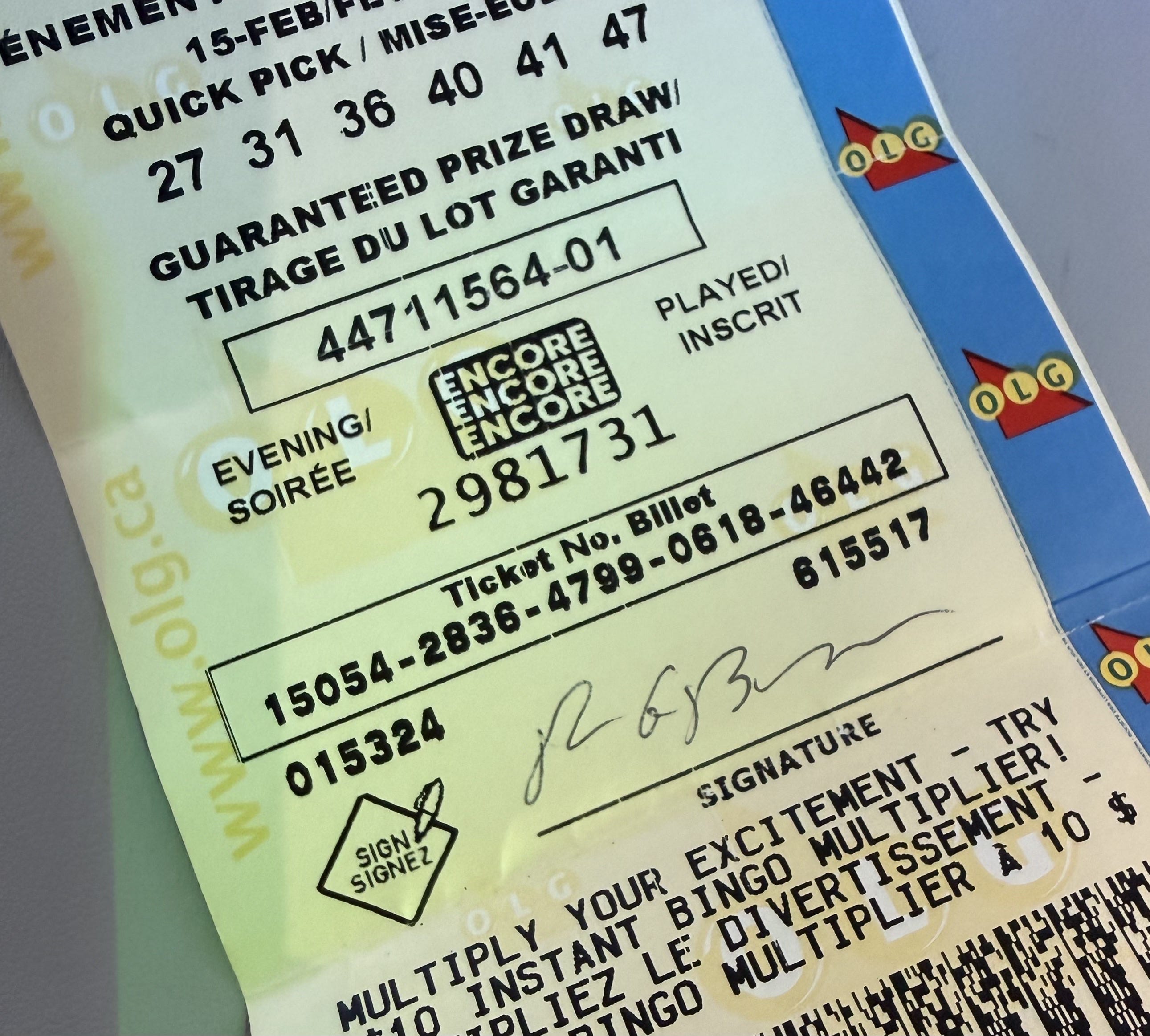
Then I found the lottery ticket.
Five draws. February 1 to February 15. The same year he died.
He had signed it. His signature, in the space provided, was careful and legible, the way his generation signed things.
My father died on January 22.
He bought that ticket before he died, signed it, tucked it into his wallet next to the library card and the reading list, and did not live to see a single draw.
I checked them anyway. Of course I did. It seemed like the right thing, his last lottery ticket, his last bet on the future. He matched a number here and there. Nothing that would have paid out. But that’s not why I checked.
I checked because he signed it.
That’s what stopped me. Not the ticket. The signature. He signed a ticket for draws he would not live to see, because that is what you do when you buy a lottery ticket. You sign it. You put it somewhere safe. You intend to check it later.
He was still intending.
***
Here is what I have learned: The mundane object is where the person actually lives.
Not in the obituary. Not in the eulogy, which is always a little bit formal and a little bit abbreviated. The person lives in the wallet. In the business cards from jobs that ended twenty years ago. In the library card. In the reading list in his daughter’s handwriting, carried next to his heart, getting softer at the folds.
In the signed lottery ticket for the draws he never saw.
When you are going through someone’s things, you will be drawn to the documents. The photographs. The letters. These matter. But do not skip past the wallet. Do not skip past the junk drawer, the shelf in the garage. The mundane objects are not beside the point. They are the point. They are who the person was when nobody was watching, and nothing felt like history yet.
The gap is information, too. The crossed-out title I can’t remember. The question of why he kept those old business cards. The things I will not recover. In family history research, the unanswerable question is not a failure. It is where the story stays alive.
You will find things when you are ready to find them, and sometimes the timing will feel like something more than an accident. I opened that box to take out his ashes for the trip west, and I found his wallet. Three days before I do the thing he asked me to do.
I don’t know what to make of that. I’m not sure I need to.
***
The ashes are packed. The wallet is on my desk.
I am going to scatter part of him in the places he loved and lived, then come home and keep going through the boxes.
There is more in there.
There always is.
Death opens doors, even the ones that we forget for years are there. This is beautiful, quietly poignant writing from a daughter who's scattering ashes as we read this.
Hoping your cross-country journey to fulfill your dad's desire is also full of marvel at Mother Nature's Canadian glory, a respite from demands, and flooding memories of times you and Dad shared.