Splits and Scatterings

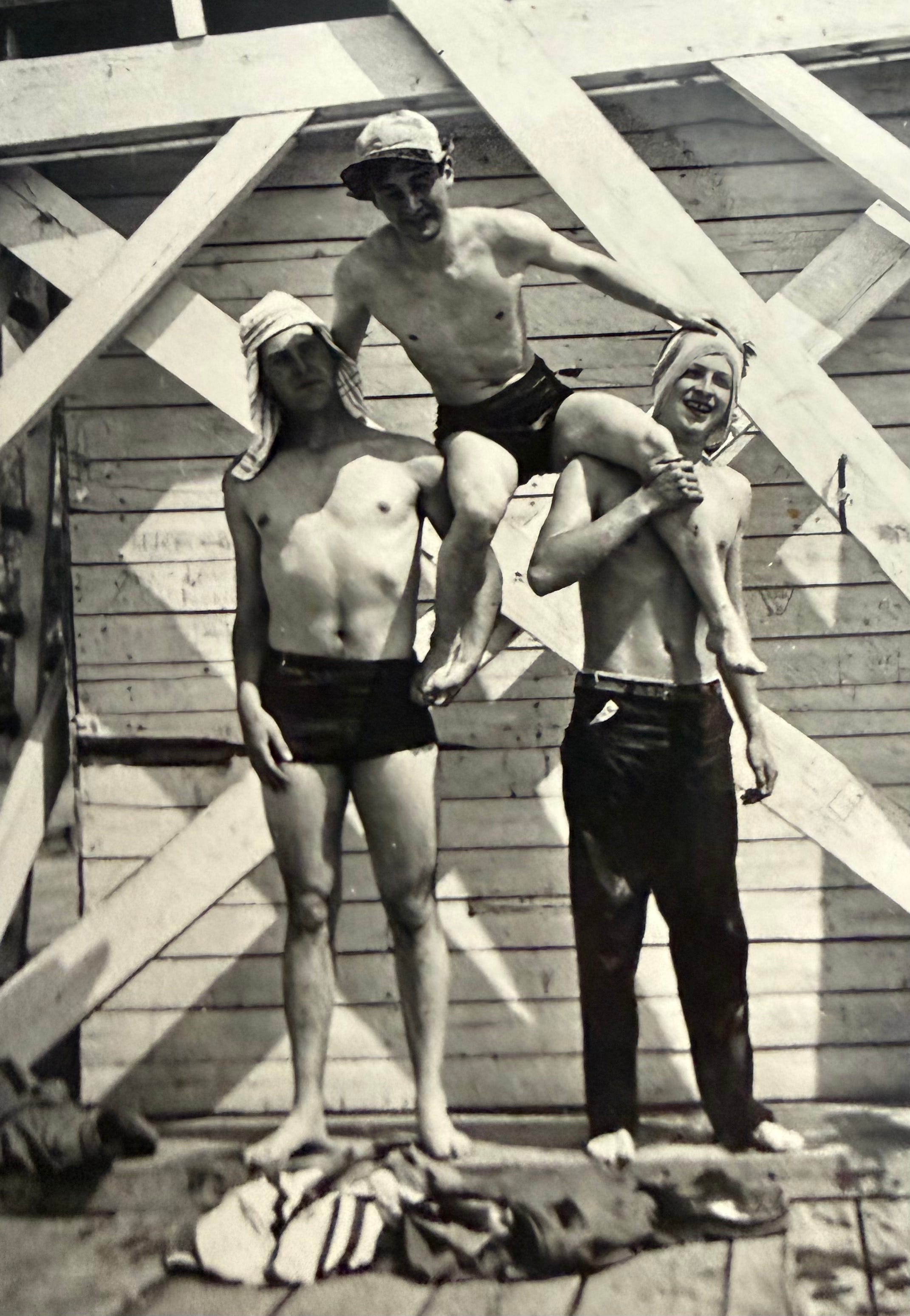
These are my father’s stories, told in his voice.
Families don’t always come apart with a crash. Sometimes the noise just shifts one morning, and something’s gone. You feel it before you can name it.
Dad’s drinking had always been there, background noise mostly, but somewhere between the worksites and whatever he never talked about, it turned harder. Meaner. He started disappearing more often than not, then came the shouting, the slammed doors, and finally, the silence. That was worse.
He left for Labrador with a job lined up in the north. Superintendent on a hydro station project. Just like that, he was gone. No suitcase goodbyes, no long talks on the porch. He was just gone.
The rest of us were left behind to scatter.
Tom went first. Montreal. He ended up working the Richelieu racetrack with a lean old character named Shorty Guise. Shorty was all angles and elbows, his pants barely hanging on his hips, a cigarette always stuck to the side of his mouth. He liked Tom, said he had a good hand with horses and an even better head for cards. “Kid’s got rhythm,” I remember Shorty saying once, as Tom jogged a trotter down the line. “Moves like he’s part of the horse.”
Stan took it the hardest. He’d always been closest to Dad, especially outdoors. He and Dad spoke the same language, the one that didn’t need words. A dog working a field. A trout line going taut. When Dad disappeared, something in Stan folded. He was sent to live with Roma Silk, one of Mum’s friends, but it never quite stuck.
Bob and the younger boys, Graeme and Morley, were packed off with Mum to Caledon East, where Grandma lived. It was tight quarters. A farmhouse that had seen better days, now crowded with too many bodies and not enough warmth. Mum didn’t drive, which meant no real way to get around. That house sat like an island surrounded by miles of rural nothing.
As for me, I ended up with Raymond Reid, Dad’s lead hand and a quiet man with a decent heart. He and his wife took me in without fuss. Just cleared a space at the table and told me where the boots went. I kept up with school. I did my chores, ate my meals, but at night, lying in someone else’s sheets, I counted the miles between my brothers and me. It always felt farther than it looked on a map.
I tried to keep in touch. I walked the distance to Caledon more than once just to see Bob, who’d come running up the road with that crooked grin, asking a dozen questions at once. We’d go for walks in the pasture or down by the creek, him chattering about frogs and hawks and some half-built go-cart he was working on, and me just trying to memorize the sound of his voice. I knew I couldn’t fix it all, but I could show up.
Back in Shelburne, school marched on as if nothing had happened. Same principal with his leather strap. Same classrooms with chalk dust and crooked blinds. I remember getting called into the office after missing two days because of work, hauling bricks.
“You’re not a mason, Barrett,” he said.
“No, sir,” I answered, “but bricks pay better than math.”
He didn’t laugh.
Tom and I crossed paths less and less, but he’d write now and then. Usually, it was a quickly scrawled note on the back of a betting slip or race schedule, never long, just a few lines written in a hurry, usually in pencil.
“Horses running wild today. Shorty nearly lost his teeth. Won fifty bucks, lost sixty. Say hi to Bob.”
Sometimes he’d sketch a little cartoon in the margin, a horse with its tongue out or a caricature of our principal getting bucked off a stool. His sense of humour hadn’t dulled. His luck at the track was another matter.
I saved a few of those notes. They smelled like saddle oil and cigarette smoke. I wondered if we’d ever all be under one roof again. Sunday dinners, wrestling for the last biscuit.
I grew into myself on those backroads, walking between Grandma’s and the Reid place. Catching rides with men who smelled of lumber and pipe tobacco. Learning how to fix things without asking.
Shelburne was a good place to be a boy. That part’s true. We went fishing. We worked. That was most of it. If there was pain in those years, and there was, we didn’t have the language for it. Didn’t go looking for one either.
One day, coming back from Caledon, I passed the old house off Highway 10, the one Dad built, beside the cemetery. Squat and boxy, half-shadowed by the trees. I stopped and just stared. Nothing moved. The garden was wild. A shutter hanging loose. I could still see us there: boys in sock feet, throwing mud at each other, the dogs losing their minds at the noise.
I didn’t go in. I stood near the edge of the property until dark. Then I turned and kept walking.